Skip to product information
1 of 5

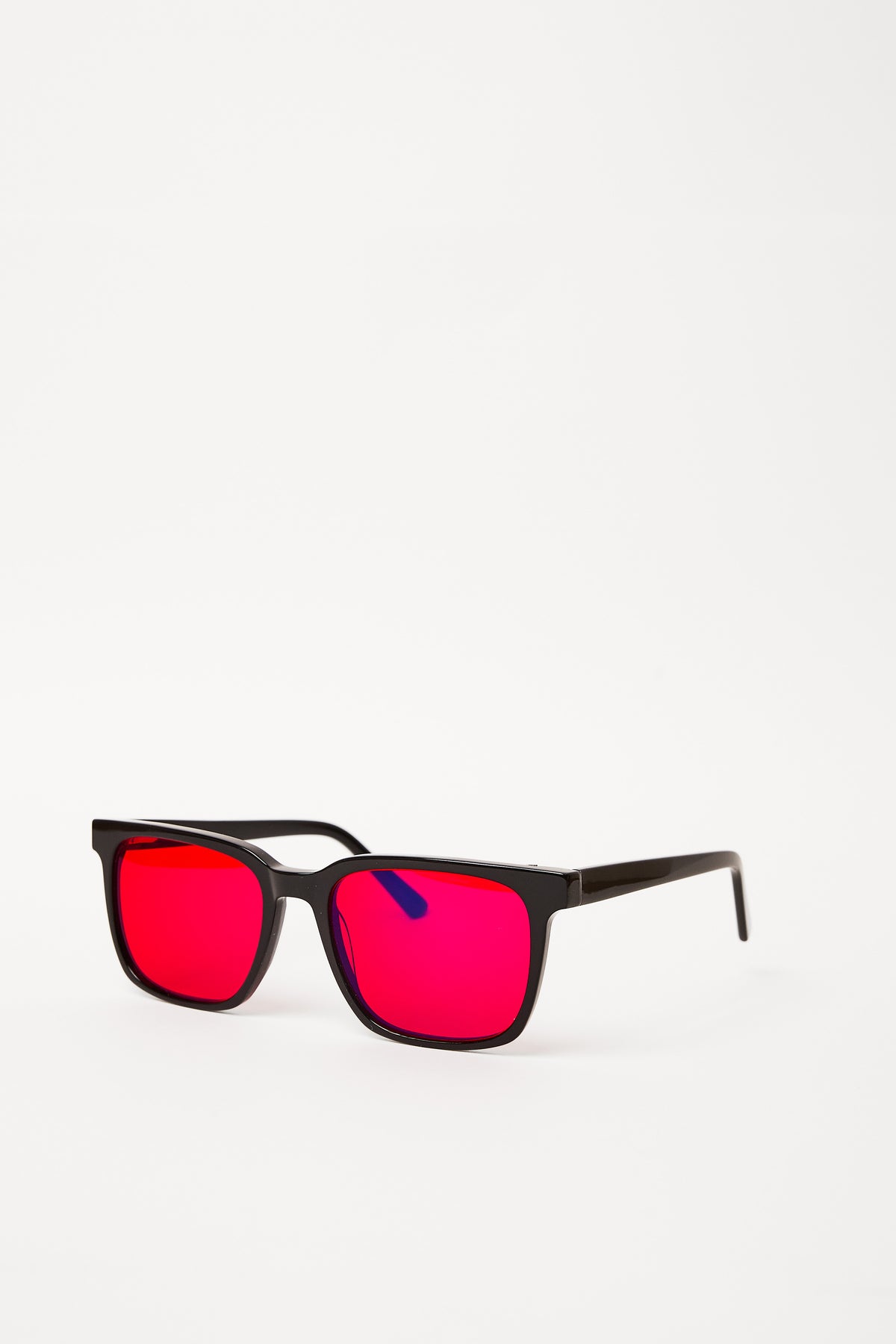
Gafas con filtro rojo - Red Filter Glasses

Gafas con filtro rojo - Red Filter Glasses

Glasses with red lenses that filter 99.93%of high-energy visible (HEV) blue light and 99.9% of green lightemitted by mobile phones, computers, and televisions. Designed for the hours before sleep, they help ensure that artificial light does not disrupt your circadian rhythm or your rest.

Regular price €89,00 EUR
Regular price €99,00 EUR Sale price €89,00 EUR
Sale Sold out
Taxes included. Shipping calculated at checkout.
  • Icono envío a domicilioFree shipping on orders over €99
  • Icono sostenibilidadSustainable Shipping
  • Icono mundoShipping throughout Europe
Partner oficial
Logo SKINVITY
View full details

Collapsible content

Description

We spend the final hours of the day in front of a screen. And just when the body should begin to prepare for sleep, that light tells it the opposite: that it is still daytime.

What almost no one mentions is that it’s not just the blue light. The biological clock is not managed by conscious vision, but by retinal cells that respond to a broader band: their peak is in the blue, between 460 and 480 nm, but sensitivity remains active up to the green, around 530 and 550 nm. And green is precisely where your screen concentrates most of its brightness. That is why a filter that only cuts a narrow strip of blue light still allows much of the signal that halts your melatonin to pass through.

SKINVITY’s Red Filter Glasses were created to accompany you precisely at that moment, and they are calibrated to cut both. Their CR39 red lens filters 99.93% of high-energy blue light, from 380 to 490 nm, and 99.9% of green light, from 500 to 570 nm. This was measured by Micro-Light Optics, an independent laboratory, every 10 nm across the entire spectrum. The result is a warmer light, closer to the natural spectrum of sunset, with which your body can once again interpret that night has arrived.

It is not a filter applied over the lens that wears off over time. The red pigment is physically infused into the material, so the filtration remains constant, use after use.

The frame is made of Mazzucchelli cellulose acetate, the gold standard in premium eyewear: durable, with a smooth feel and a lasting sheen. Each frame is hand-polished; its surface is hypoallergenic and skin-friendly, and its unisex square silhouette works on any face and with any style. Weighing only 34 grams, you’ll forget you’re even wearing them.

Wear them 1 to 3 hours before bed while you answer your last messages, watch a series, or read on your tablet. It is the simplest gesture to take care of your rest without giving up your screens. They are not sunglasses or driving glasses: they alter color perception, and that is a direct consequence of cutting the entire range that interferes with sleep.

Benefits

They promote your nightly rest

By filtering 99.93% of HEV blue light and 99.9% of green light in the hours before sleep, they help prevent your body from halting melatonin production, allowing it to prepare for sleep naturally.

They support your circadian rhythm

Your internal clock doesn't just respond to blue light: its sensitivity extends to green light, exactly where screens concentrate most of their brightness. By cutting these two bands, your body continues to interpret day and night as it should, even if you finish your day in front of a screen.

Greater visual comfort in low light

The red lens softens the glare from phones, computers, and televisions in dim environments, alleviating eye strain at the end of the day.

Measured filtration, not just promised

Micro-Light Optics, an independent laboratory, measured the lens transmittance every 10 nm across the entire spectrum: below 1% throughout the 400 to 580 nm range.

Filtration that doesn't wear off

The red pigment is physically infused into the lens, not a surface coating. The filtration remains constant and uniform use after use, without degrading from cleaning.

Lightness you forget you're wearing

At only 34 grams with a hand-polished, hypoallergenic Mazzucchelli acetate frame, they can be worn for hours without discomfort or marks.

A simple gesture for self-care

No apps, no complicated routines, no giving up your screens. Put them on 1 to 3 hours before sleep and let them do their job.

Technology

How they work, scientifically speaking

The key lies in the retina. In addition to the rods and cones we use to see, the eye has a third type of photoreceptor: intrinsically photosensitive retinal ganglion cells (ipRGCs), which contain a photopigment called melanopsin. Its peak sensitivity is around 480 nm, right in the blue band of the visible spectrum. But the curve doesn't drop to zero there: sensitivity remains significant into the green, around 530 to 550 nm. And green is where screens concentrate the most brightness, because it is the area to which the human eye responds with the greatest intensity.

When these cells detect that light, they send a direct signal to the suprachiasmatic nucleus, the brain's central circadian clock, which in turn regulates melatonin secretion in the pineal gland. By day, this is a useful mechanism: it keeps us alert. At night, screen light activates this same pathway; the brain interprets it as still being daytime and slows down melatonin production, delaying sleep.

That is why a filter that only cuts a narrow band of blue lets much of the signal through. Red Filter Glasses intervene across the full range, at the source of the problem—the light reaching the eye:

Verified 99.93% filtering of HEV blue light, from 380 to 490 nm, and 99.9% of green light, from 500 to 570 nm. Measured by Micro-Light Optics, an independent laboratory, with transmittance recorded every 10 nm across the entire 280 to 780 nm spectrum. Report available upon request.

Physical red pigment infusion: the pigment is integrated into the lens material, not a surface coating. This is why the filtration is homogeneous across the entire surface and does not degrade with cleaning or use.

Resulting spectrum close to sunset: transmission remains below 1% in the entire 400 to 580 nm range and only rises starting at 590 nm, into the red. The light that passes through the lens resembles that of dusk, consistent with the signal the body expects at that hour.

The optical substrate is CR39 (Columbia Resin #39, poly(diethylene glycol bis-allyl carbonate)), an organic resin with a refractive index of approximately 1.50 and an Abbe number close to 58, which translates into sharp optics and low chromatic aberration. It is also lighter and more impact-resistant than mineral glass.

An honest clarification: these lenses are not sunglasses or driving glasses, and are not designed to be. They deliberately alter color perception, because cutting the full range that interferes with sleep and passing a traffic light perception test are incompatible objectives. It is a spectral filter calibrated for a specific biological function.

In short: 34 grams of optical engineering dedicated to one thing: ensuring your circadian rhythm does not depend on the time you turn off your screen.

Red Filter Glasses Are For You If...

  • You work or relax in front of screens until late at night.
  • You find it difficult to disconnect at night and want to protect your sleep without giving up your devices.
  • You notice eye strain or screen glare in low-light environments.
  • You want to support your circadian rhythm simply, without apps or complicated routines.
  • You are looking for a carefully crafted, light, and durable piece that combines science and premium design.
  • You understand well-being as something that also begins with good rest.

HOW TO USE?

STEP 1

1. Put them in properly

Rest the glasses on the bridge of your nose and adjust the arms behind your ears. At just 34 grams, you'll forget you're wearing them in no time.
STEP 2

2. Put them on at dusk

Use them while you are in front of your cell phone, computer, tablet, or television. Ideally: 1 to 3 hours before bed, which is when blue light most interferes with your sleep.
STEP 3

3. Let them do their work

You don't have to do anything else. The lens filters up to 99.92% of HEV blue light consistently while you wear them.
STEP 4

4. Pair them with a great atmosphere

To notice them more, dim the lights in your home in the hours leading up to sleep. You help your body interpret that night has arrived.

FAQs

How are they different from regular blue light filter glasses?

Most blue light filter lenses on the market have a surface treatment that only blocks part of the spectrum and can wear off over time. In Red Filter Glasses, the red pigment is physically infused into the lens material and filters up to 99.92% of HEV blue light in the 380 to 500 nm range, consistently and without degradation with use.

Why is the lens red and not yellow or clear?

The more complete the blue light filtering, the warmer the lens tint. Red blocks the broadest spectrum of HEV, precisely the wavelengths associated with melatonin suppression. This is why they are especially effective at dusk and in low light environments.

When should I use them?

You can wear them whenever you're in front of a screen, although we recommend using them 1 to 3 hours before sleep, which is when blue light most interferes with your rest.

Do they help you sleep better?

They help ensure that the artificial light from your screens doesn't disrupt your circadian rhythm in the hours before sleep, promoting normal melatonin secretion. Rest depends on many factors, but reducing blue light exposure at night is one of the most well-supported actions.

Can I wear them over my prescription glasses?

Red Filter Glasses are not prescription glasses and do not correct visual impairments. Their design is intended to be worn alone. If you regularly wear prescription glasses, consult your optician for the best option for you.

Can they be washed? Will the filter get damaged?

Yes, clean them with the included microfiber cloth and clean water. Since the pigment is integrated into the lens and not a coating, the filtration is not affected by cleaning. Avoid paper, abrasive fabrics, perfumes, alcohol, and solvents.

Do you have questions?

Book an appointment with our customer service for personalized, free advice.